
PUNJI: Fractional Real Estate Investment App for Dubai
Fractional property is a trust problem before it is a tech problem. We designed an app that makes a regulated investment feel as easy as shopping, from the first sign-up to the first month of rent.

The market moment
Dubai has become one of the most active markets for fractional property. The Dubai Land Department launched the region's first real estate tokenisation pilot in March 2025, and the DLD projects tokenised property could reach AED 60 billion by 2033, about 7% of the city's transactions. Investors who once needed millions can now own a slice of a building.
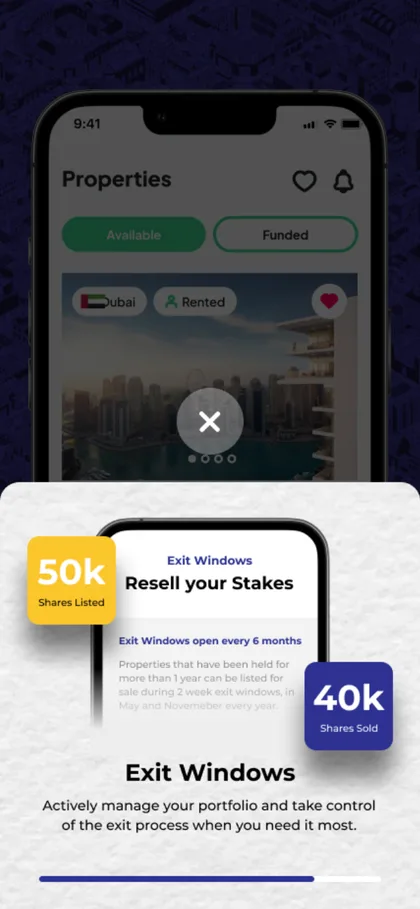
PUNJI was designed for that moment: a fractional real estate app where people invest from AED 500, earn a share of monthly rent and can sell their stakes back through scheduled exit windows.
The perception problem
Fractional property is a trust problem before it is a technology problem. People are being asked to hand over money for something they will never hold the keys to. Every screen had to answer an unspoken question: is this safe, is this real, and can I get out?
What we designed
We designed the product across three phases of flows:
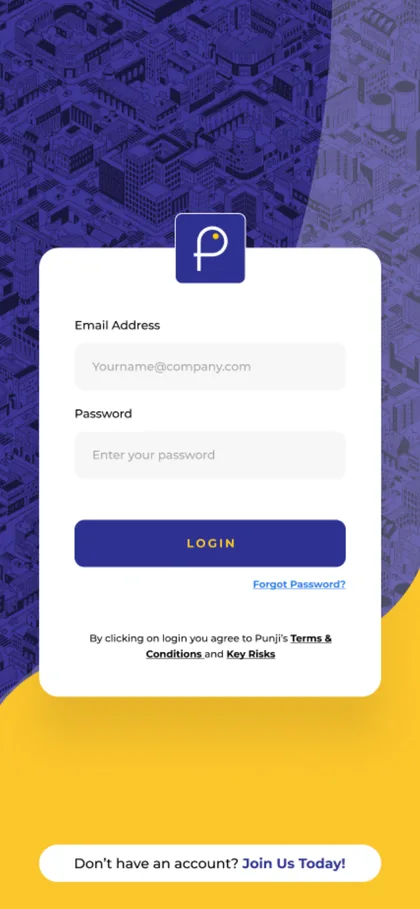
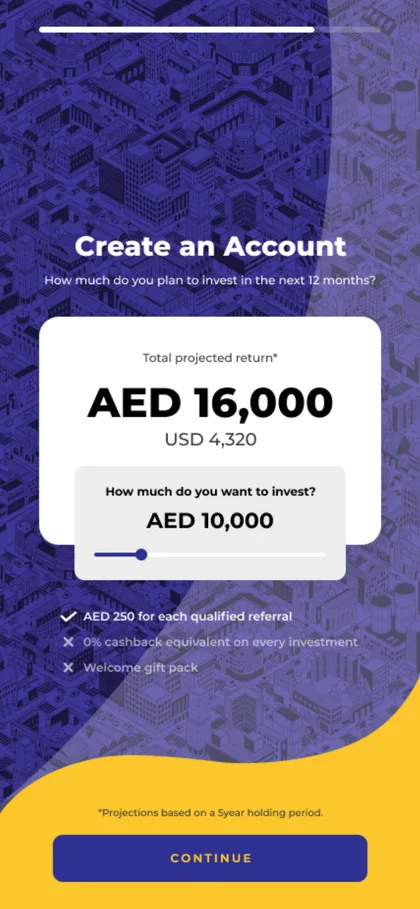
- Onboarding: sign-up with email and phone verification, an investment-intent slider that shows a projected return as you move it, employment and source-of-funds questions explained in plain language, and the investment agreement.
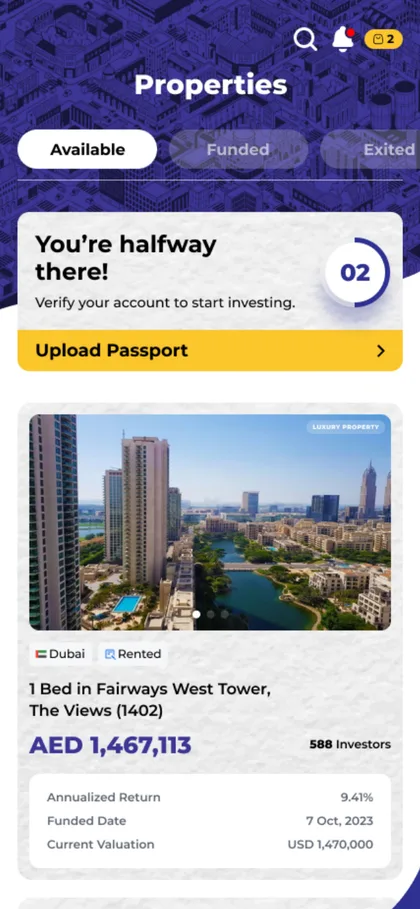
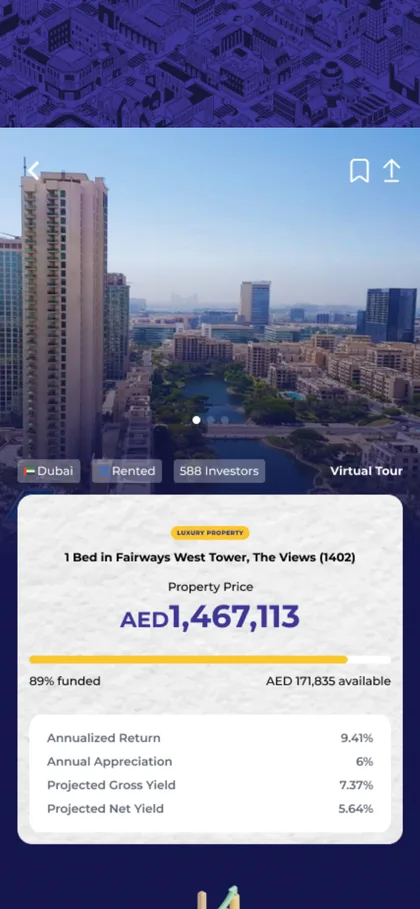
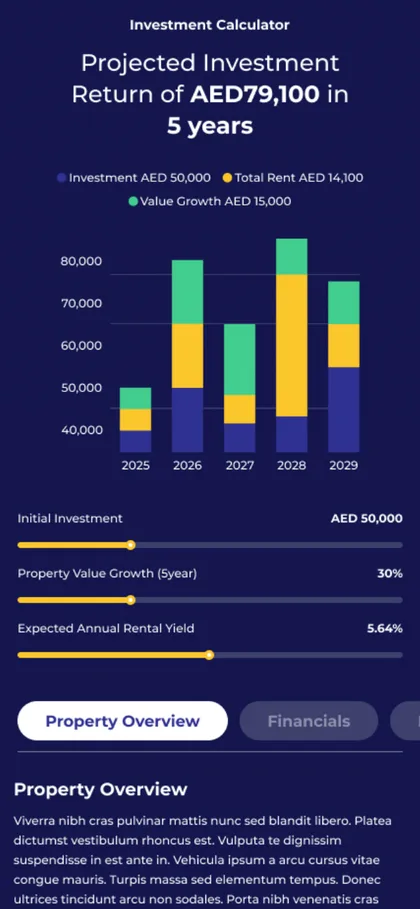
- Discovery: a property marketplace with available, funded and exited listings, rich property pages with a virtual tour, a five-year investment calculator and similar properties.
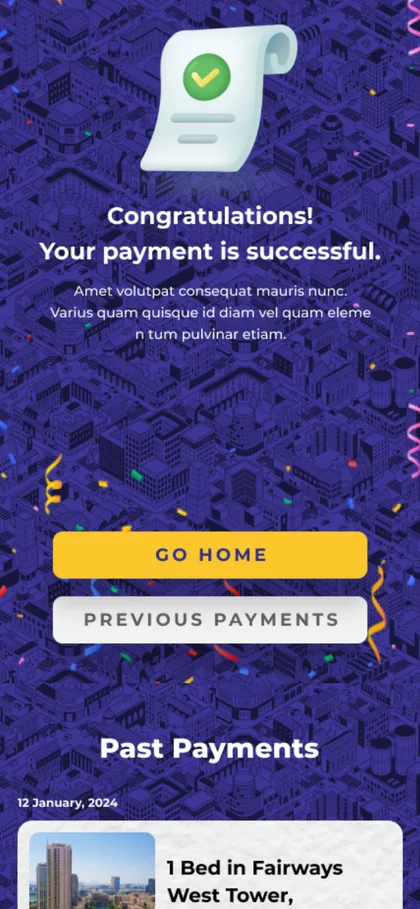
- Investing: a cart that holds stakes in several homes, offers and free-rent rewards applied at checkout, and payment by card or bank.
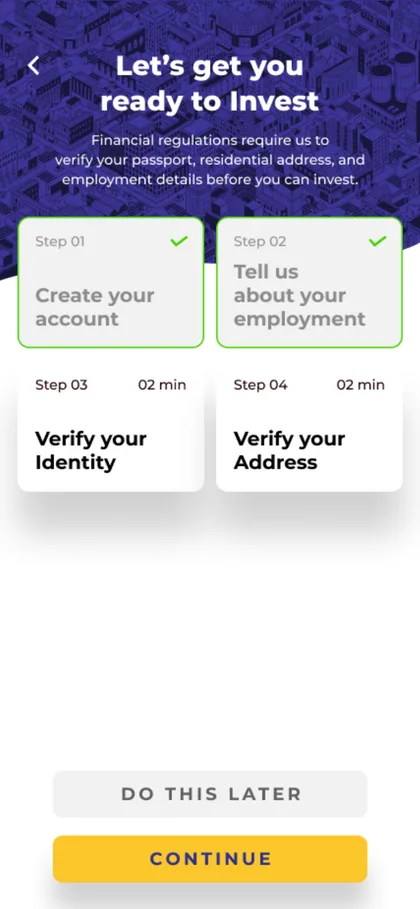
- Trust: passport and address verification with photo guidance, a four-step “ready to invest” progress tracker and biometric login.
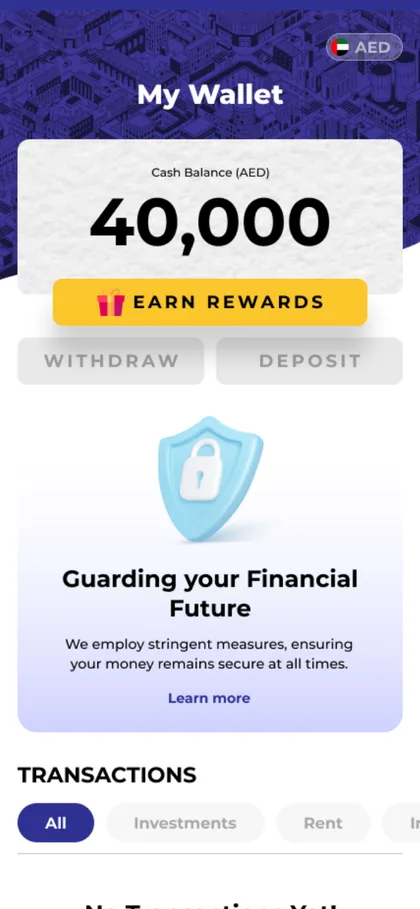
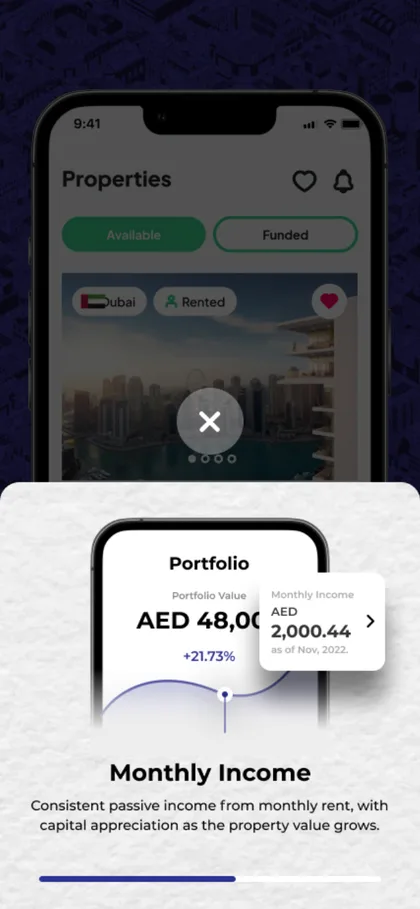
- Owning: a wallet for deposits and withdrawals, a portfolio of stakes, monthly income, exit windows to resell, and a full transaction history.
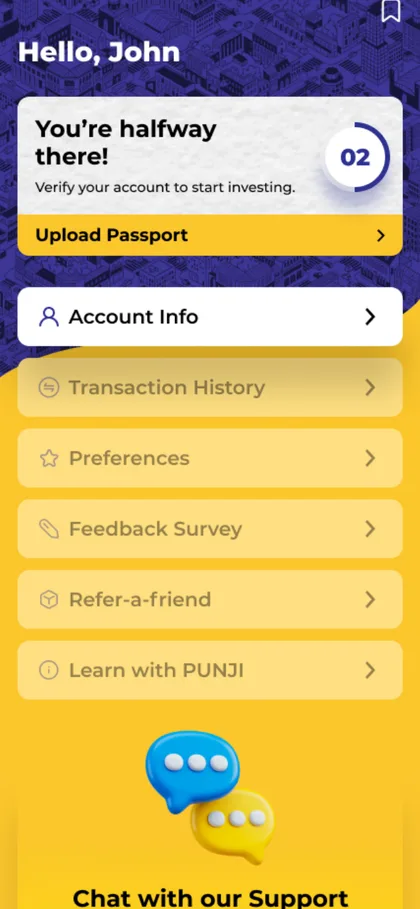
- Staying: rewards tiers, refer-and-earn, seven display currencies, and a Learn with PUNJI library of guides, FAQs and a glossary, with support chat one tap away.
Design principles
- Show progress, not paperwork. Verification is framed as “you're halfway there”, not a wall of forms.
- Explain every ask. Each regulatory question says why it is being asked.
- Make the numbers honest. Returns, rent and appreciation are shown together, with projections clearly labelled.
- Never trap the investor. Exit windows are part of the first story, not a footnote.
Why it matters
In fractional real estate, the app is the asset's front door. If it feels trustworthy, the investment feels trustworthy. That is a perception job as much as a product one.
Questions About This Build
What is fractional real estate investing?+
Buying a share of a property rather than the whole unit, and earning a proportional share of its rental income and any change in value.
What did OCDS design for PUNJI?+
OCDS Tech designed the PUNJI app experience across three phases: onboarding and verification, the property marketplace, checkout, wallet and portfolio, rewards, exits and learning.
Can OCDS design and build fintech or proptech apps?+
Yes. We design product experiences for regulated, high-trust categories such as investing and real estate, from flows and interface design to launch.
Is fractional property investment regulated in Dubai?+
Dubai's tokenised real estate pilot is overseen by the Dubai Land Department alongside the Virtual Assets Regulatory Authority. Investors and founders should take professional legal advice for their specific case.